WASHINGTON (AP) —After days of secrecy, senior U.S. officials on Wednesday dictated the memorandum of understanding with Iran to journalists. The officials spoke on condition of anonymity to read the draft, which Iran has not released, ahead of a formal signing ceremony set for Friday.
Click here to read a draft of the peace deal with Iran
The U.S. draft of the agreement includes a new ‘minimum’ standard for the dilution of Iran’s highly enriched uranium and toll-free passage of the Strait of Hormuz for 60 days, though it doesn’t preclude future fees, the officials said. It also features provisions to ensure “territorial integrity” of Lebanon after Israel’s latest attacks there against Hezbollah, according to the officials. In return, the U.S. will move to waive, but not eliminate, some wide-ranging sanctions against Iran once the deal is signed.
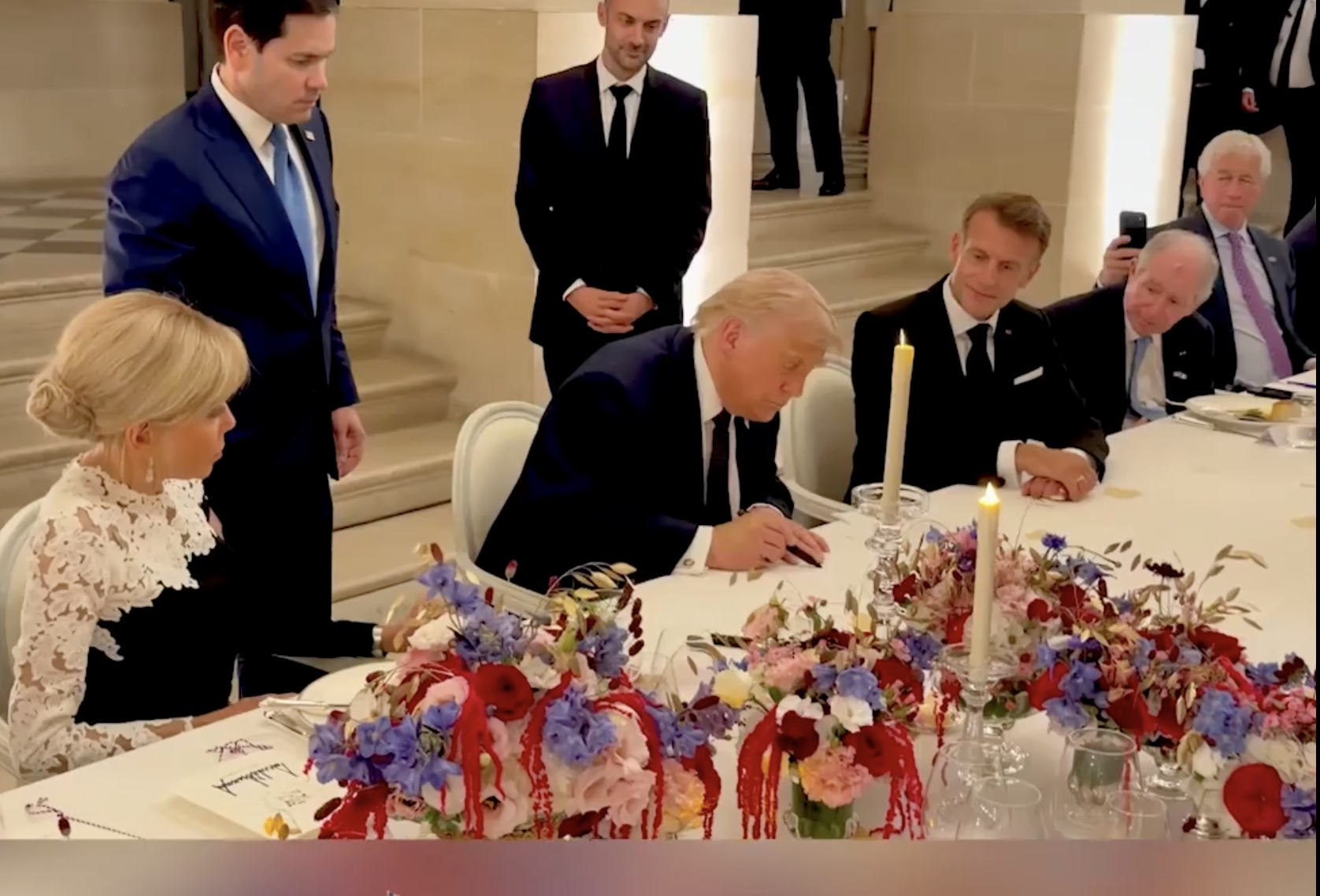
U.S. President Donald Trump, meanwhile, is wrapping up his time with world leaders in Évian-les-Bains, France, for the Group of Seven summit. His last stop in France is a glitzy dinner at the Palace of Versailles outside of Paris.
Here is the latest:
US official says US and Iran presidents have signed agreement
Though officials had said Trump and U.S. Vice President JD Vance had digitally signed the agreement Sunday and that a ceremonial signing would be held Friday in Switzerland, a U.S. official who spoke on condition of anonymity to share details about the agreement said Trump signed the deal while at Versailles on Wednesday.
The U.S. official said Iranian President Masoud Pezeshkian also signed it Wednesday, though Iran did not immediately comment. It wasn’t immediately clear if that act started a 60-day negotiating clock to reach a final deal. It was also not clear how Trump’s signing of the deal at Versailles differed from his digital signing on Sunday.
Trump tells reporters he signed the memorandum of understanding with Iran
“It’s signed,” Trump said as he left Versailles.
“I signed it in Versailles,” Trump said. “Just signed it.”
White House says Trump signed agreement on ending war in Iran
The White House said Trump signed a memorandum of understanding on ending the war in Iran while at Versailles, though cameras weren’t present for that.
Many historic treaties have been signed at Versailles over the centuries, ending wars or territorial disputes. The most infamous was that sealed in 1919 officially ending World War I — whose harsh terms imposed on Germany are blamed by some historians for laying the groundwork for World War II.
The gilt doors of Versailles
Trump walked through the palace’s courtyard and met his hosts, posing for photographers in front of the famed golden doors.
“Versailles is not gold leaf — Versailles is the real deal,” Trump had explained to reporters earlier about why he said yes to the late dinner outside Paris after the G7.
Earlier, Macron had told reporters that “Versailles is a diplomatic tool and an instrument of influence.”
GOP senator calls Iran deal ‘worst foreign policy blunder in decades’
“Reagan is rolling over in his grave,” said Sen. Bill Cassidy of Louisiana in a post, referring to the former president.
“Iran’s nuclear ambitions were not curbed, and they have learned that threatening the Strait of Hormuz works and will undoubtedly leverage it in the future,” the Republican said.
“Before the war, the strait was open, Iran was being crushed by sanctions, and 13 service members were still alive,” Cassidy said. “Now, 13 Americans are dead, families have paid billions at the pump, sanctions will be lifted, and the bombing has stopped.”
Cassidy, who lost his primary reelection bid after Trump endorsed his challenger, has been among the rare Republicans willing to criticize the president.
“This is the worst foreign policy blunder in decades,” he posted.
Cruz says Trump is getting ‘bad advice’ on Iran
The Texas Republican, a leading hawk on Iran, heavily criticized the draft of the memorandum of agreement between the U.S. and Tehran shortly after it was released to journalists.
“Giving billions of dollars to theocratic lunatics who want to murder us is not a good idea,” Cruz told reporters. “I think the president, unfortunately, is receiving bad advice.”
Cruz was also critical of how the agreement addresses the issue of tolls through the Strait of Hormuz. The U.S. draft secures toll-free passage through the vital waterway for 60 days, but it doesn’t preclude fees in the future.
“Setting up Iran to be in charge of the Strait of Hormuz in perpetuity and to charge tolls is not in America’s interest,” Cruz said. “In my view, the Ayatollah should not reap a single penny from the free transit of the seas.”
Energy experts say deal to reopen Strait of Hormuz is welcomed, given low oil reserves
The tentative deal for Iran to reopen the Strait of Hormuz and sell its oil without restrictions will help ease supply shortages in the short term, energy experts said.
“The oil market welcomes more supply from Iran or anywhere else right now,” said Jim Krane, energy research fellow at Rice University’s Baker Institute. “Stocks are running low.”
But in the long term, there’s the chance that too much oil will come to market, Krane said, adding, “reopening the strait has come alongside investment in more oil production elsewhere, especially in the U.S. and Latin America.”
The global supply glut of crude oil that existed pre-war could return in 2027 if the peace deal holds, according to research firm Clearview Energy Partners. A report released by the International Energy Agency on Wednesday estimates a global shortfall of 0.9 million barrels of oil and petroleum products per day for 2026, which is more optimistic than other recent estimates, according to Clearview.
Senate Republican leader says MOU leaves more questions
Sen. John Thune said he doesn’t think the document that’s now been released is the final product.
“My understanding is, it’s a framework, it’s an MOU, and probably have more to come in terms of any final agreement,” Thune told reporters at the Capitol.
Congress has not yet been briefed on the emerging deal.
“I don’t think probably what you’re seeing right now represents what a final deal will look like,” he said. “I think that sounds like it’s still going to be negotiated.”
He said there are “a bunch of things” senators will have questions about.